Database Systems researcher Tianyu Li joins Computer Sciences faculty
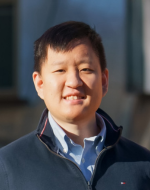
New Assistant Professor Tianyu Li joins the department this fall from MIT, where he completed his PhD in EECS working with Samuel Madden. Before that, he earned his bachelor’s and master’s degrees in computer science at Carnegie Mellon University under Andy Pavlo. A database systems researcher, Li studies how to manage data efficiently and reliably in today’s changing technical landscape, where cloud computing is reshaping how data is stored and processed, and AI is transforming how it is used.
Where are you moving to Madison from?
I’m coming from Boston, where I just finished my PhD at MIT. I grew up in Shanghai, China and came to the US for undergrad at Carnegie Mellon.
Did you always know you wanted to study computer science?
Actually, no. I applied pretty widely as an undergrad — engineering, economics, history. It just so happens that I applied to CS in CMU and was admitted, and at CMU, once you’re in the computer science school, that’s basically your only major.
It turned out I enjoyed it a lot, so it worked out.
What’s your field, and what do you focus on?
I work on database systems, broadly. The field has decades of research and industrial success behind it, with major systems like Postgres and Oracle powering everyone’s use cases. What excites me is how many of these old challenges are taking new forms as computing itself evolves with cloud computing and AI. I am fascinated by how we can build on past good ideas in database systems—and where we need new ones—to solve problems that look different from the ones traditional databases were designed for.
Can you explain that for people without a computer science background?
Traditional databases go to great lengths to keep data from being lost or corrupted when computers fail. But that has become difficult to do at scale, as today’s applications increasingly spread their work across many machines in the cloud that may fail independently. Even if each component protects its own data, those protections don’t automatically add up to a reliable whole. My PhD work brought those guarantees to applications built from many cooperating services, helping them recover correctly, quickly, and automatically from failures. This type of system keeps everyday applications like Uber and DoorDash running and makes sure things don’t go wrong when hardware outage hits. That’s one example of taking a longstanding database problem and rethinking it for a new setting. I see similar opportunities with AI: As AI systems take on more data-driven tasks, we need to rethink how to make those tasks reliable and efficient.
I hope students leave [my courses] with the confidence to draw on what’s already known, question its assumptions, and develop ideas of their own to solve data management challenges of the next decade.
What do you hope students take away from your classes?
I’m teaching Next-Generation Data Systems this fall. We are living at an exciting moment where data systems, along with many other disciplines, is due for a radical reinvention. The interesting thing about data systems is that we have a track record of reinvention almost every decade in response to both new computing capabilities and new use cases for data. I hope students leave with the confidence to draw on what’s already known, question its assumptions, and develop ideas of their own to solve data management challenges of the next decade.
Where do you see your own research heading here?
AI is a big part of it – it’s bringing new ways for people to work with data and changing many fundamental assumptions that power modern database systems. People today expect to query their data systems with natural language and for it to autonomously solve complex, open-ended tasks. One direction here is reliability: How do we make guarantees in our data systems when the tasks given are vague natural language prompts? How do we prevent autonomous agents from accidentally corrupting data or causing anomalies? Another direction is efficiency: AI is incredibly computationally intensive, and we need to make them faster and more affordable to deploy at scale and for everyone.
The Wisconsin Idea helps ground our work in a time when it’s ever so important to remember that sophisticated technology exists to make people’s lives better, not just for the sake of sophistication.
How does your work connect to the Wisconsin Idea?
My resolution for my lab, which I think is an instantiation of the Wisconsin Idea, is to own problems, not solutions. It’s easy in computer systems research to be satisfied by how technically sophisticated and elegant a piece of systems is and to forget that the system exists to solve someone’s real-world problems in the first place. I think the Wisconsin Idea helps ground our work in a time when it’s ever so important to remember that sophisticated technology exists to make people’s lives better, not just for the sake of sophistication.
Did you know much about UW–Madison’s connection to your field before you got here?
Wisconsin’s database group is one of the oldest and most influential in the field, and it’s a proud heritage to be joining. In fact, there’s a lot of Badger genes in my own academic lineage — both of Sam’s (my MIT advisor) PhD advisors graduated from the Wisconsin Database group, and Andy Pavlo (my CMU advisor) worked in Wisconsin as research staff. The group will be celebrating its 50th anniversary early next year with hundreds of alumni who have shaped the field.
What are you looking forward to in Madison?
Andy said that the Hoofers was the greatest thing ever. I’ve always wanted to learn how to sail but kept procrastinating too much at MIT. Maybe I will finally get the chance to sail on our beloved lakes!
Any hobbies outside of research?
In Boston I played bass guitar in a couple of bands. I’m hoping to find one here, too.