Eric Harslem MS’68 receives 2026 Distinguished Achievement Award
By Rachel Robey
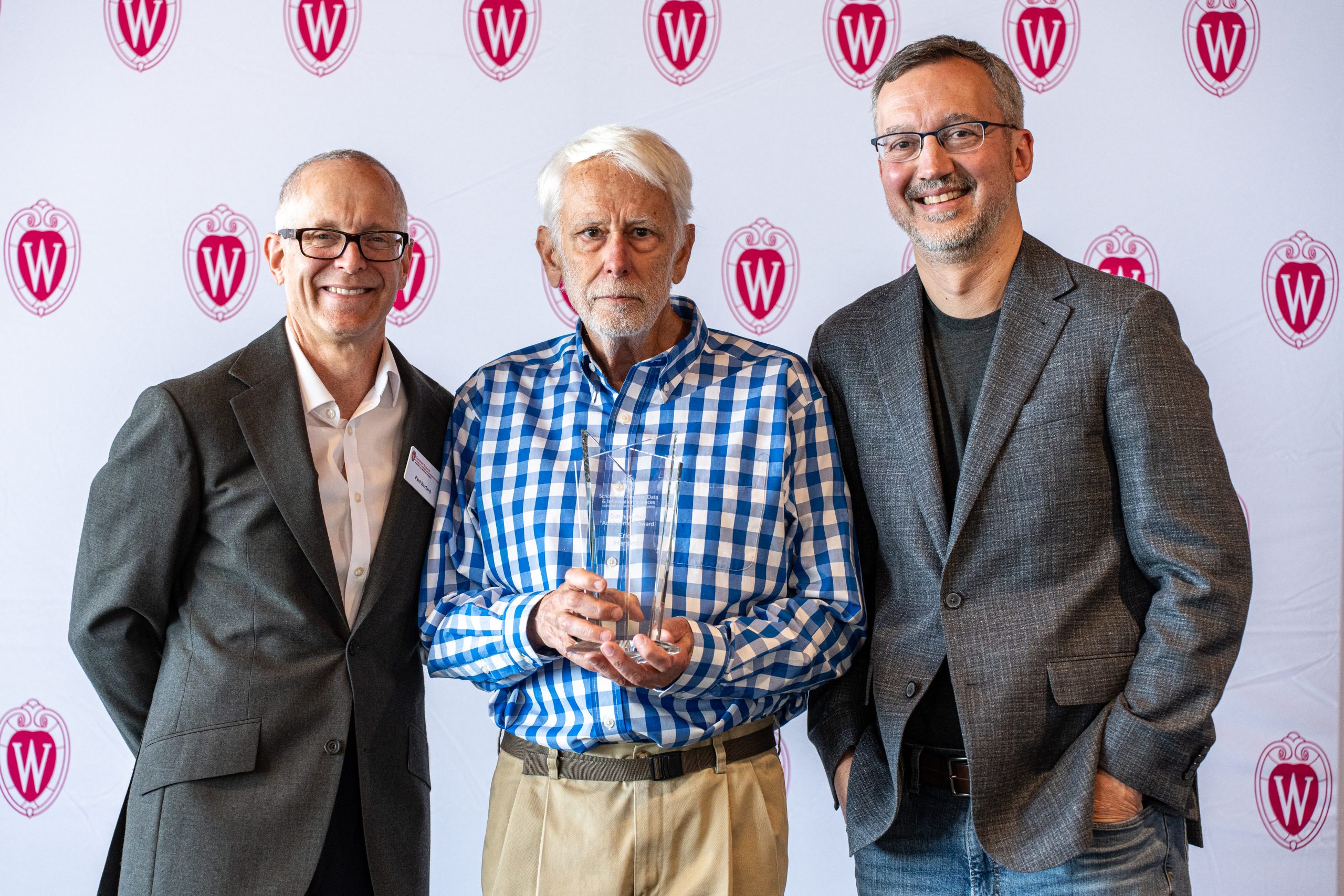 Honoring alumnus Eric Harslem, former senior vice president and chief technology officer at Apple and Dell, for contributions in research, leadership, and education.
“If you don’t make mistakes, you don’t make anything.”
Honoring alumnus Eric Harslem, former senior vice president and chief technology officer at Apple and Dell, for contributions in research, leadership, and education.
“If you don’t make mistakes, you don’t make anything.”
 These are words to live by for alumnus Eric Harslem MS’68, a former senior vice president and chief technology officer at Apple and Dell. With many learnings along the way, he spent his career producing some of the most iconic computing technologies and products of our time.
In recognition of his contributions, Harslem has received the 2026 Distinguished Achievement Award from the School of Computer, Data & Information Sciences (CDIS) at the University of Wisconsin–Madison. One of just eight individuals to receive this year’s award, Harslem and the remaining 2026 Distinguished Achievement Awardees exemplify excellence across research, leadership, and education.
To make progress, make mistakes
As one of the earliest graduates from UW–Madison’s Department of Computer Sciences (founded in 1964, it’s the second-oldest computer science department in the nation) Harslem found himself in uncharted territory. Like so many after him, he landed at a tech start-up in California called Apple.
“It was the wild west,” he says. In January 1986, just months after founder Steve Jobs had been fired over disagreements with then-CEO John Scully, Harslem was part of launching the company’s first desktop computer without Jobs.
The Macintosh Plus boasted a whopping 1 MB of RAM and a 9-inch monochrome display. Not only did it solve most of the serious criticisms leveraged at its predecessor, it also incorporated new products like Laser Reads and Page Maker, inadvertently helping set the stage for a mass exodus from traditional typesetting to word processing.
“It turned the whole company around,” he continues. Today, the Macintosh Plus is considered by some to be “the first truly great Mac.”
These are words to live by for alumnus Eric Harslem MS’68, a former senior vice president and chief technology officer at Apple and Dell. With many learnings along the way, he spent his career producing some of the most iconic computing technologies and products of our time.
In recognition of his contributions, Harslem has received the 2026 Distinguished Achievement Award from the School of Computer, Data & Information Sciences (CDIS) at the University of Wisconsin–Madison. One of just eight individuals to receive this year’s award, Harslem and the remaining 2026 Distinguished Achievement Awardees exemplify excellence across research, leadership, and education.
To make progress, make mistakes
As one of the earliest graduates from UW–Madison’s Department of Computer Sciences (founded in 1964, it’s the second-oldest computer science department in the nation) Harslem found himself in uncharted territory. Like so many after him, he landed at a tech start-up in California called Apple.
“It was the wild west,” he says. In January 1986, just months after founder Steve Jobs had been fired over disagreements with then-CEO John Scully, Harslem was part of launching the company’s first desktop computer without Jobs.
The Macintosh Plus boasted a whopping 1 MB of RAM and a 9-inch monochrome display. Not only did it solve most of the serious criticisms leveraged at its predecessor, it also incorporated new products like Laser Reads and Page Maker, inadvertently helping set the stage for a mass exodus from traditional typesetting to word processing.
“It turned the whole company around,” he continues. Today, the Macintosh Plus is considered by some to be “the first truly great Mac.”
 “I was at Apple for ten years. I made a lot of mistakes, but I also figured out how to fix them,” he says. “When I got hired at Dell, I knew the formula for product development.”
Supporting (STEM) education
In 1997, Harslem co-founded the KLE Foundation, a family foundation focused on education reform in Central Texas, with spouse Rani Clasquin. Over the years, the Austin-based couple have invested heavily in expanding educational opportunities among underserved communities.
“Austin is a big tech capital, somewhat like Madison,” he says. “But almost none of the tech workers grew up or went to school here.” Through his work with the KLE Foundation, Harslem has supported Austin’s charter schools, public schools, and universities, and has helped to expand computer science education across the region. Most recently, he’s excited about an “AI cohort” KLE has formed that exposes students to AI technologies and applications.
“It seems AI is poised to impact everything,” says Harslem. “At the same time, computational thinking will remain essential to developing better AI prompts as well as improving the ability to develop AI apps.”
Looking ahead, Harslem remains committed to addressing emerging issues in education and expanding the computer science education pipeline in Austin.
_____________________________________________
Read about all the School of Computer, Data & Information Sciences Distinguished Achievement Awardees here.
“I was at Apple for ten years. I made a lot of mistakes, but I also figured out how to fix them,” he says. “When I got hired at Dell, I knew the formula for product development.”
Supporting (STEM) education
In 1997, Harslem co-founded the KLE Foundation, a family foundation focused on education reform in Central Texas, with spouse Rani Clasquin. Over the years, the Austin-based couple have invested heavily in expanding educational opportunities among underserved communities.
“Austin is a big tech capital, somewhat like Madison,” he says. “But almost none of the tech workers grew up or went to school here.” Through his work with the KLE Foundation, Harslem has supported Austin’s charter schools, public schools, and universities, and has helped to expand computer science education across the region. Most recently, he’s excited about an “AI cohort” KLE has formed that exposes students to AI technologies and applications.
“It seems AI is poised to impact everything,” says Harslem. “At the same time, computational thinking will remain essential to developing better AI prompts as well as improving the ability to develop AI apps.”
Looking ahead, Harslem remains committed to addressing emerging issues in education and expanding the computer science education pipeline in Austin.
_____________________________________________
Read about all the School of Computer, Data & Information Sciences Distinguished Achievement Awardees here.
Honoring alumnus Eric Harslem, former senior vice president and chief technology officer at Apple and Dell, for contributions in research, leadership, and education.
“If you don’t make mistakes, you don’t make anything.”
Eric Harslem MS’68, former senior vice president and chief technology officer at Apple and Dell, received CDIS’ Distinguished Achievement Award.
The Macintosh Plus.